


January is Jorge Ben Month on Edge of the Line. We’re celebrating 50 years of África Brasil.
The slower tempo of ‘Xica Da Silva’—compared to África Brasil’s opening track ‘Ponta de Lança Africano (Umbabarauma)’, for example—means there’s more space between chords, notes, and instruments. Jorge’s guitar is comparatively laid back, switching between downstrokes and more relaxed strumming. In the chorus, the cuíca only plays one note every two bars. Jorge lingers on many of his syllables, as do the backing singers – right from those opening “ooh”s.
Jorge’s upstrokes just before the three in each bar give his guitar part a light, skippy feel. He also plays on the beat, but those upstrokes are not unlike the jitterbug energy from cuíca, played across the album by Neném.
The downstrokes on the One give the “Xica Da, Xica Da, Xica Da Silva” chorus some bite. They also signal the beginning of new sections. After the second chorus, for example, which starts at 1:02, Jorge plays a firm downstroke at 1:15 before singing the next verse (“A imperatriz do Tijuco”) a hair after the second sixteenth note.
Jorge’s unhurried vocals means ‘Xica’ has some of the sunny, laidback vibe of his earlier work, even when the funk influence is felt. He’s not grunting on the offbeats like James Brown; it’s closer to crooning. But the drive and the One is there. The backing singers give that first beat extra impact in the following verse with their “Do ... do-do”s, before joining in with Jorge’s “Da corte do Rei Luis”.
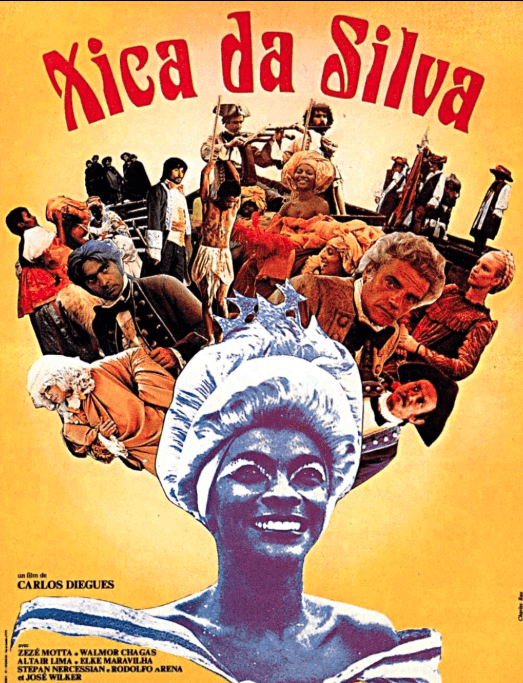
The title and lyrics refer to Francisca da Silva de Oliveira, who was a Brazilian woman born into slavery in the 18th century. Her father was Portuguese and her mother an African slave. Francisca had a relationship with one of the richest people in Colonial Brazil, João Fernandes, and joined elite social clubs. She was the subject of Xica, a film released in 1976, the same year as África Brasil, based on a novel by João Felicio dos Santos. Ben’s song appears in the film.
Jorge wrote many songs empowering Afro-Brazilian women. The writer Gabriel Proiete de Souza argues that Ben has consistently championed black women throughout his career. Jorge was doing so at a time when much of Brazil largely overlooked racism.
The Italian TV programme Que Viva Musica showed Jorge Ben playing ‘Xica Da Silva’ in a studio. Jorge plays a Les Paul and the guitar solo, similarly energetic to his rhythm playing but demanding such different technical skills.
Top image from IMDb.