


This is the penultimate week of our six-week celebration of 60 years of funk.
The extended version of ‘Give It Up Or Turnit A Loose’ rivals ‘Funky Drummer’ for the title of “song that most sounds like it was recorded to be sampled for hip-hop”.
How quickly James Brown’s funk accelerated. Only four years before he released ‘Give It Up Or Turnit A Loose’ in 1969, ‘Papa’s Got a Brand New Bag’ had introduced the world to a new music. ‘New Bag’ was based on a twelve bar blues chord progression. That is to say, Brown hadn’t fully committed to his philosophy of rhythm over melody and harmony. Two years later after ‘New Bag’, ‘Cold Sweat’ featured just one chord change. Two more years later and Brown had dug deep into funk.
‘Give It Up Or Turnit A Loose’ was one of Browns’s six singles to top the R&B charts from 1967 to 1970, the years of his purest funk (the others were ‘Cold Sweat’, ‘I Got the Feelin’, ‘Say It Loud - I’m Black and I’m Proud’, ‘Mother Popcorn’, and ‘Super Bad’). The song was then released on the 1970 album, It’s a New Day – Let a Man Come In.
One guitar is amped so that it’s almost toneless, closer to a drum. The other’s muted chords are almost as prominent as the ones that (briefly) ring. Brown’s vocals are more percussive: his “Baby!” on the One and the “Uh” (on an offbeat 1:50) are like snare hits.
The ’69 single lasted less than three minutes, before ‘Give It Up Or Turnit A Loose’ was extended for the 1970 pseudo-live album Sex Machine. The instrumentation is quite different here. The horns are mostly restricted to staccato punches, but the bridge section’s riff – at the end of which they gleefully hold a high-pitched note, sounding far more jubilant than in the single – hinted at the ’70s horn-led jams to come.
The organ (mixed to the left) and the guitar playing chords (on the right) work almost as one instrument, the guitar picking up where the organ leaves off.
As with many extended Brown tracks, the second half (often the b-side of a single, though not in this case) was more focused on instrumentation. From 4:22, there’s a congas-and-vocal only section. Though Nate Jones played on the original version, Clyde Stubblefield was the drummer on the Sex Machine version, and Brown gives him a shoutout: “Clyde,” he says at 5:10, ushering the drummer back in. Then at 5:20: “Bootsy”, and Bootsy Collins’s bass returns. Bootsy only played with Brown for around a year, but appeared on a remarkable list of classics, including ‘Get Up (I Feel Like Being a) Sex Machine’, ‘Get Up, Get Into It, Get Involved’, and ‘Soul Power’.
(Brown’s “Clap your hand / Stomp your feet” was a prominent sample in Robert Hood and Femi Kuti’s ‘Variations 4’ and ‘Variations 5’. They were two tracks on a seven-part album with Hood chopping Brown samples and Femi’s brilliantly improvising on saxophone.)
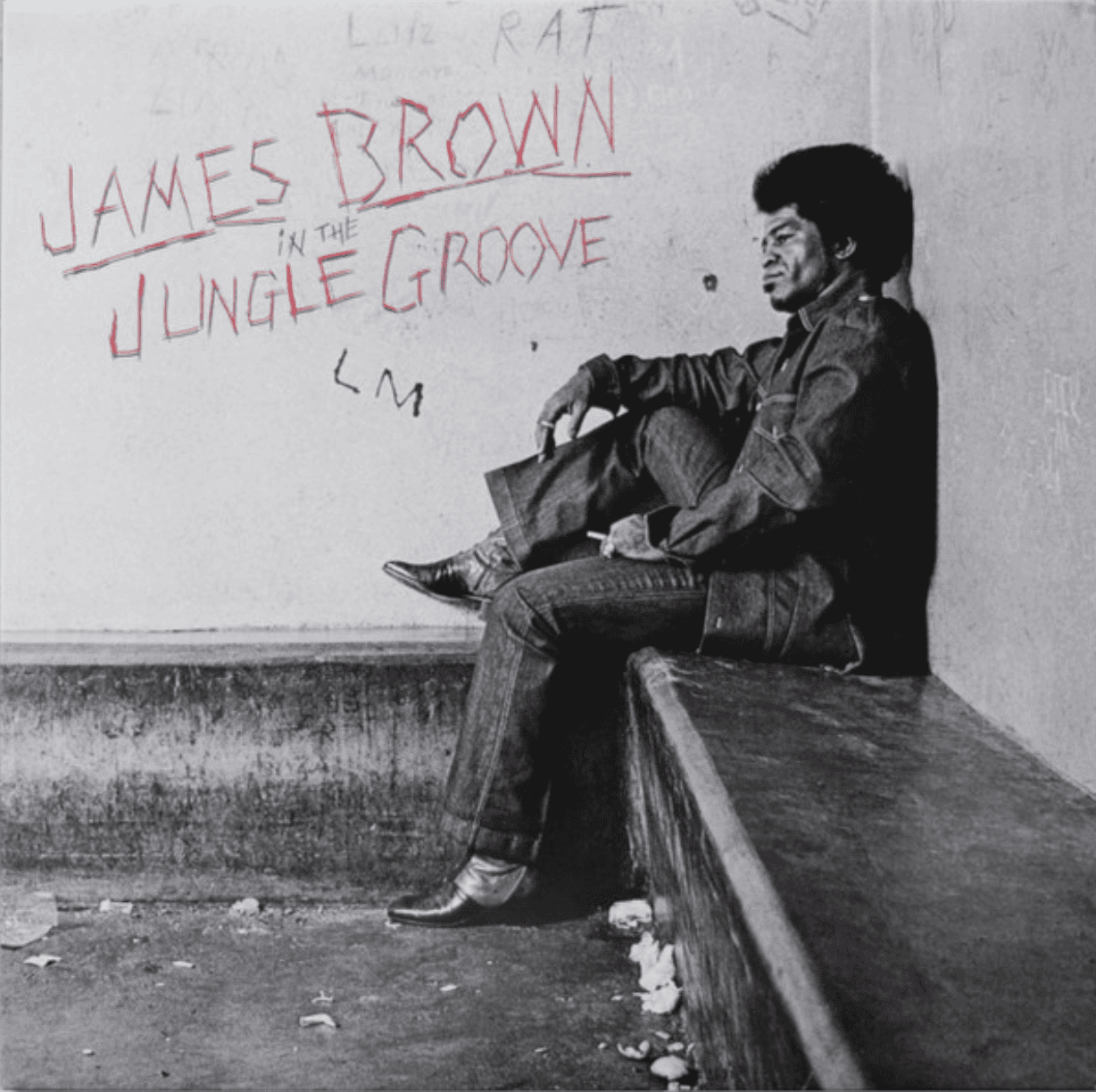
‘Give It Up’ was remixed for In the Jungle Groove (1986), the acclaimed compilation that focused on the instrumental and minimal-vocal stretches of Brown’s music. The main difference in this version is the absence of the overdubbed crowd, which heightens the focus on rhythm. The single mix, ironically released when the revolution was taking place, misses the emphasis on funk – and some of the most impactful moments of the song. At 3:34, after several repetitions of “I need the feelin’”, Brown shrieks, the guitar chords come in, and Stubblefield kicks it up a gear with the smack of his snare extra potent. At 5:05, when Bootsy’s bass returns on the One, Brown must have known the bassist had learned the most important lesson in funk.
Top image from Discogs.