


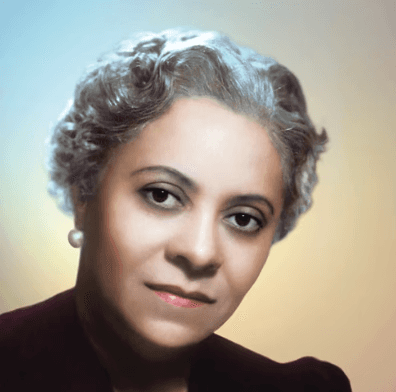
Florence Beatrice Price was the first African-American woman to have a composition played by a major US orchestra. She composed hundreds of works, including four symphonies.
Price’s work is said to echo Antonin Dvořák’s; both composers were inspired by “Black American folk music of the Antebellum and Reconstruction periods”, writes Megan Szostak.
Her first symphony contains a particularly interesting movement, ‘III. Juba Dance’. This replaced the traditional third-movement scherzo and is a Price innovation, removed from Dvořákian influence.
There are fantastic recordings of Florence Beatrice Price’s Symphony No.1 in E minor and Symphony No. 4 in D minor by Fort Smith Symphony & John Jeter.
The mix is lovely: from 1:25, the horns and percussion playing polyrhythms are easily distinguished yet form a beautiful whole.
The Juba dance originated in the 19th century among enslaved African people. In the 18th century, plantation owners feared that slaves were hiding codes in their drumming patterns. Instead of drumming, the enslaved people slapped their hands, legs, and body to make music.
The symphony was scored for a large orchestra with three percussion players, playing untraditional instruments.
Szostak writes:
“(...) the genre-defying nature of the composition — which samples themes from Black American folk music and elements of western European classical music, spiritual music and blues — is unmatched by any other classical composer.”
At Berlin Philharmonic in 2024, the Small Symphonic Orchestra of the Collegium Musicum Berlin, conducted by Donka Miteva, performed ‘III. Juba Dance’.
During the triumphant section starting at 2:25, the higher register strings play with an intensity not heard in some recordings.
Similarly, from 2:58, the percussion has extra wallop on the One, joining the strings for that important beat of the crescendo.
After 3:30, the drums – replacing the body drums of a Juba dance – play rapid beats while the strings and horns sustain a final few notes.
After the symphony’s premiere in 1933, Price was repeatedly called to the stage to receive applause. Phillip Huscher writes,
“It was a startlingly unfamiliar sight: a lone Black woman in an all-white, all-male community, the image perfectly symbolizing the singularity of Black success in the blinding whiteness of the mainstream classical music world.”
Classical music has stayed white; the orchestra in Berlin was almost entirely white. Linda Katherine Cutting, a classical concert pianist, wrote in 2022 of “a long history” of seeing talented Black classical musicians being undermined.
“The sad fact is that in all major American orchestras, only 1.8% of the musicians are Black, a statistic that doesn’t touch the field of talent that’s available.”
Despite that reality – and Price’s reality, in which she fled the south to escape racial tension, attacks, and lynchings – there is joy in her music. As the horns come in after the first few measures, and the strings play that skippy melody from 0:52, you can’t help but feel hope.
Top image from Fort Smith Symphony.