


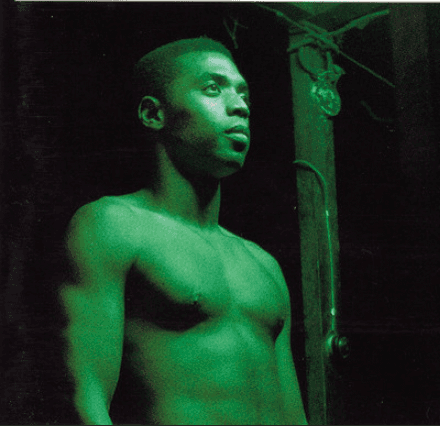
In our first Friday Fela to feature an artist influenced by Fela Kuti, rather than the man himself, we dig a song from his eldest son.
In 1986, Femi Kuti left his father Fela’s band to form The Positive Force with Dele Sosimi. The latter was Egypt 80’s musical director and keyboardist; he played the same roles for Femi’s band, as well as bandleader – he was responsible for recruiting and training new musicians. After three albums and by the time of Shoki Shoki (1998), Sosimi had left to form his own band.
But even before Sosimi’s exit, Femi had been composing and arranging every song (as well as playing alto and tenor saxophone). He followed in Fela’s footsteps, composing all of his tunes, and blending African and American musics. The most notable difference is arguably the track lengths: Femi’s songs are shorter, sharper; there’s less room for solos, and a greater focus on hooks. They’re more like the 2020s posthumous edits to Fela’s songs. And Femi’s still taking on the Nigerian authorities.
‘Eregele’, a highlight of Shoki Shoki, has a different target: those who break their legs, “enter graveyard in the name of sports”, and play “dangerous” games. Femi namechecks boxing, American football, ice hockey, kick boxing, Thai boxing, and Japanese karate. In the first verse, he criticises those who wear their “battle dress” to kill their opponent, and tells us it’s better to “Relax and enjoy your game” – that way, “Win or lose” we’re happy.
(In 2010, Femi was asked if he exercises to stay in shape. He said, “I used to do a thousand press-ups each day. I think I am too old now.” But he doesn’t stop moving on stage.)
The bass, playing the same note for much of the song, acts like a percussion instrument. Rarely did Kuti senior have the bass play so many staccato notes. It’s sometimes joined by the keyboard, particularly on the One, which plays sustained chords to contrast with the bass’s brevity.
In the triumphant motif, the bass is joined by the horns, as from 4:55. It’s one of several brilliant horn motifs for the album; Femi had Oluwaseyi Clegg on baritone sax, Tiwalade Ogunlowo on trombone, and Gbenga Laleye on trumpet.
The song’s arranged so that the motif has maximum impact. It’s there in the intro, brilliantly led up to by drum rolls and stabbed keyboard and guitar chords, and it doesn’t return until nearly five minutes in. That’s after Femi’s admonished those playing dangerous games. Elsewhere, the drums fall out (2:43) to give the return of the kick more power. Congas are mixed subtly to the left, keeping up the fidgetiness as the horns play more minimally during the verses.
Rather than two guitars, with one playing a single-note melody in the vein of Fela (and sometimes James Brown), there’s just one guitar. Olufemi Fadipe plays minimally, most notably stabbed chords on offbeats, leaving the melodic work for Femi’s vocals and the horns.
In 1999, two thirds of the way through his set at North Sea Jazz Festival (40:30), Femi played ‘Eregele’. Like the rest of the set, it’s played with relentless energy. A year after the album’s release, the song has a rather different arrangement and feel; things are more relaxed in the vocal sections. Femi blows an early, powerful solo around the motif. Oluwaseyi Clegg’s more playful phrases on baritone sax then give the song a character the studio version doesn’t even hint at. Femi then shows off his incredible sustain again. Those push ups were doing his lung capacity no harm.