


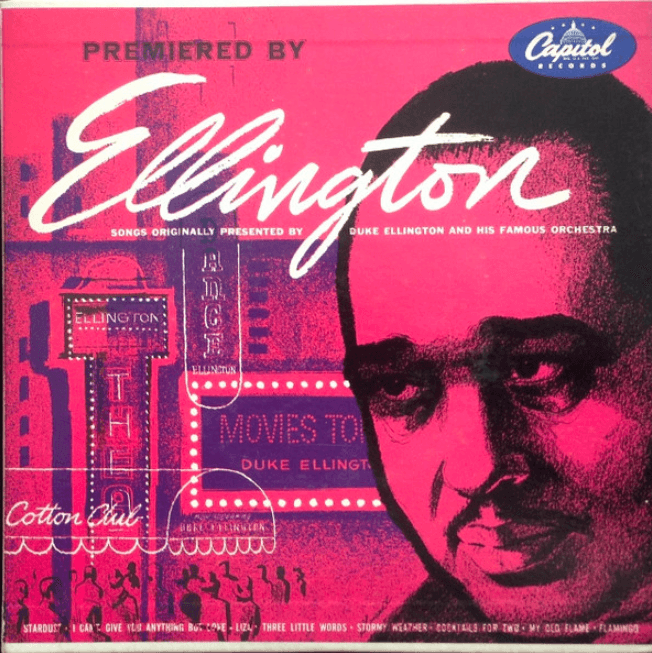
‘Stormy Weather’ by Duke Ellington And His Famous Orchestra
Aside from a few notes in the opening seconds, it’s not until 45 seconds when Duke Ellington’s piano is heard in ‘Stormy Weather’ (1933). The whole track is arranged without concern for Duke’s ego: it’s the trumpets of Willie Cook, Ray Nance, and Cat Anderson that take centre stage and supply the most triumphant moments.
Miles Davis gave the track “twenty-five stars”, “all the stars you can”. In a “blindfold” listening session for Down Beat – where musicians reviewed songs with no information about who was playing – Miles called Billy Strayhorn’s arrangement “warmer than Duke usually writes”. (It seems Miles was talking about a later Capitol re-release of the song.)
‘Superstition’ by Quincy Jones
Anderson was most prolific with Duke, but he played for a variety of other musicians, appearing on two albums by Quincy Jones. 1973’s You’ve Got It Bad Girl featured a cover of Stevie Wonder’s ‘Superstitious’. Jones sings, with help from Bill Withers, Billy Preston and Wonder himself. The arrangement is perhaps most notable for the prominent saxophone solo, played by Phil Woods. After that solo, Anderson plays that joyous riff that Stevie used to elevate a song about such a debilitating phenomenon.
‘Did I Hear You Say You Love Me’ by Stevie Wonder
Eight years after releasing ‘Superstition’, Wonder opened his Hotter Than July (1980) album with ‘Did I Hear You Say You Love Me’. It had some of the same fidgety, maximalist arrangement style. One notable difference in instrumentation is the prominent role of the electric guitar, with the vibrato at the end of the riff. (‘Superstition’, in contrast, owed much of its fidgetiness to multiple clavinet parts.) Wonder plays synths and vocoder on this song (a short list of credits by his standards), giving up guitar duty to Benjamin Bridges, bass to Nathan Watts, and drums to Dennis Davis.
‘Fame’ by David Bowie
Davis had played drums on possibly the funkiest song of David Bowie’s career, ‘Fame’, released on 1975’s Young Americans. George Clinton described it as a “James Brown–style performance” in his memoir, and has credited it as the inspiration for Parliament’s ‘Give Up the Funk (Tear the Roof off the Sucker)’. He told drummer Jerome Brailey to remember the drumbeat from ‘Fame’ when they heard it on the radio; Brailey did and was credited as co-writer. The extended “Weeee want the funk” from Parliament’s tune echoes the prolonged ‘Fame’ syllable from Bowie’s track.
Bowie’s guitarist, Carlos Alomar, had played with Brown in the late ’60s. Brown took the guitar riff of ‘Fame’ for his song ‘Hot (I Need to Be Loved, Loved, Loved, Loved)’, released later in ’75.
‘Night Of The Living Baseheads’ by Public Enemy
One of the many songs to have sampled ‘Fame’ was ‘Night Of The Living Baseheads’, from Public Enemy’s second album It Takes A Nation Of Millions To Hold Us Back (1988). Instead of the distinctive riff, P.E. took the more melancholic guitar and drums from Bowie’s intro. It only appears at 2:47 in during a short transitional section. Chuck D’s voice then comes booming back in with, “I’m talking about bass”, which reintroduces the main, restless groove led by a dissonant saxophone sample from the The J.B.’s’ ‘The Grunt’.