


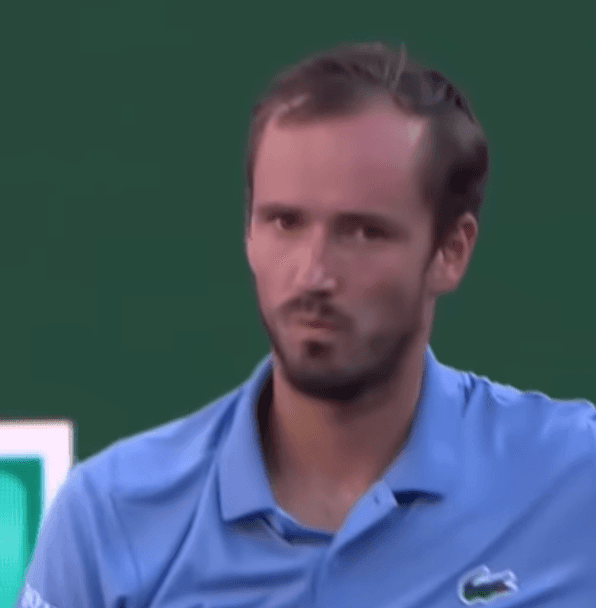
After the Indian Wells final on Sunday, Daniil Medvedev said he was “looking forward to more tennis” at a high level. He returned to the top 10 for the first time since July.
World No 1 Carlos Alcaraz, who lost to Medvedev in the semi-finals, said he’d never seen the latter play at that level.
Jannik Sinner edged Medvedev in two tiebreaks the final, but the Russian’s run was a sign the Big Two might not be as dominant as many have predicted.
In the quarter-finals, Jack Draper got his first ever win against Novak Djokovic, the only player to consistently challenge Alcaraz and Sinner in the Slams in the last few years.
This week and next, the possible new Big Four compete in Miami, in the second part of the Sunshine Double. They each received first round byes.
Could Medvedev and Draper join Alcaraz and Sinner in a new Big Four?
Challenging the Big Two will take a lot more work. No one has beaten Alcaraz and Sinner in the same tournament since Djokovic at the 2023 ATP Finals.
Medvedev is 30 years old, but Djokovic has showed that perceptions of a tennis player’s prime might need reassessing. And both Medvedev and Draper’s recent performances offer reasons for optimism.
Medvedev’s rock solid baseline play has returned over the last month, including against Alcaraz. When Medvedev is on form, the length on his groundstrokes and his consistency on both sides is impeccable. In the fourth game (0:55), his persistence eventually wears Alcaraz down and earns an early break.
Mid-rally, Alcaraz had forced Medvedev deep behind the baseline with a good backhand down the line.
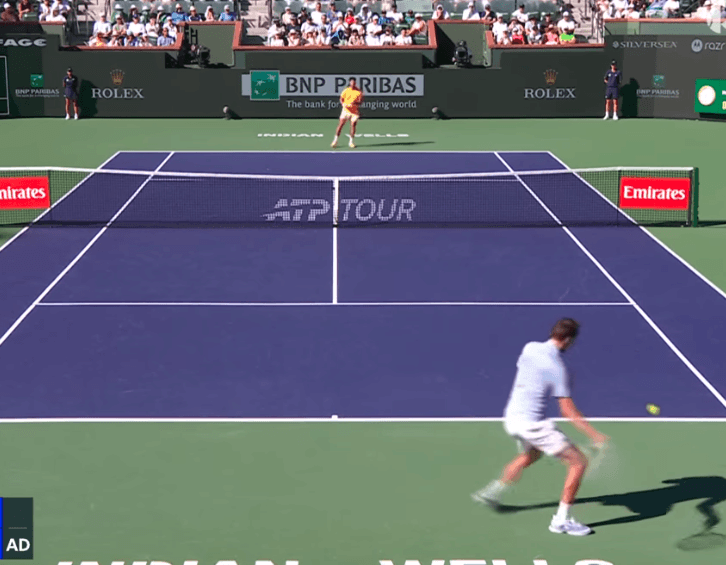
But Medvedev brilliantly resets the point with a deep, floating forehand that lands by Alcaraz’s feet. They’re back into a crosscourt exchange, and when Medvedev’s in rhythm, he can hang in there all day.
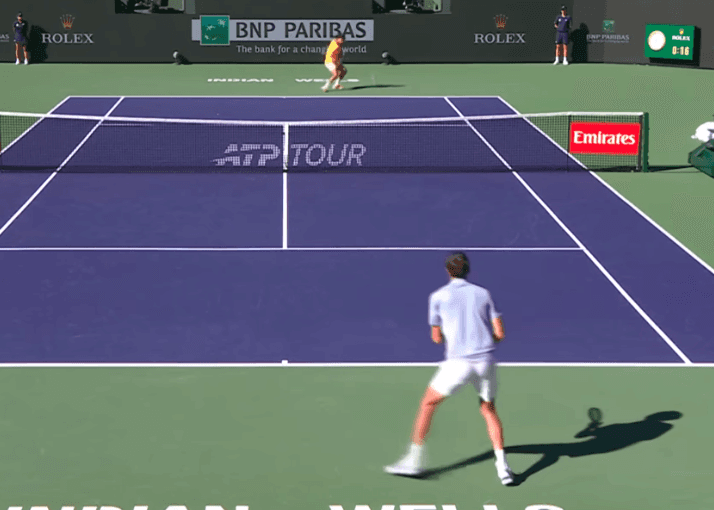
Alcaraz only won around a quarter of his second serve points. It was the first time this season he’d won less than 45%.
Medvedev is an unusual player: a consistent baseliner who returns from miles behind the baseline and grinds out long rallies, but with an electric serve that means his own service games often last a snap of the fingers.
Sinner put it simply: “He has two different game styles when he serves and when he returns.”
Medvedev beat Draper in the quarters. The latter was hoping to defend his Indian Wells title from last year, the biggest of his career and his first Masters 1000. Draper beat Carlos Alcaraz in the semi-final. He had already beaten Alcaraz at Queen’s in 2024, meaning he has beaten the world No 1 on both grass and hard court. (A couple months later in Rome, Alcaraz got his revenge with a 6-4, 6-4 win. Draper hasn’t had any of his best results on clay yet.)
Looking back at that Indian Wells match, it’s clear how much Draper had built on what was previously a slightly one-dimensional game (big serve and forehand), particularly compared to his opponent. Draper has improved his movement, backhand, defensive skills, variety in groundstrokes, drop shots, and net play.
Draper broke early and got on a roll.
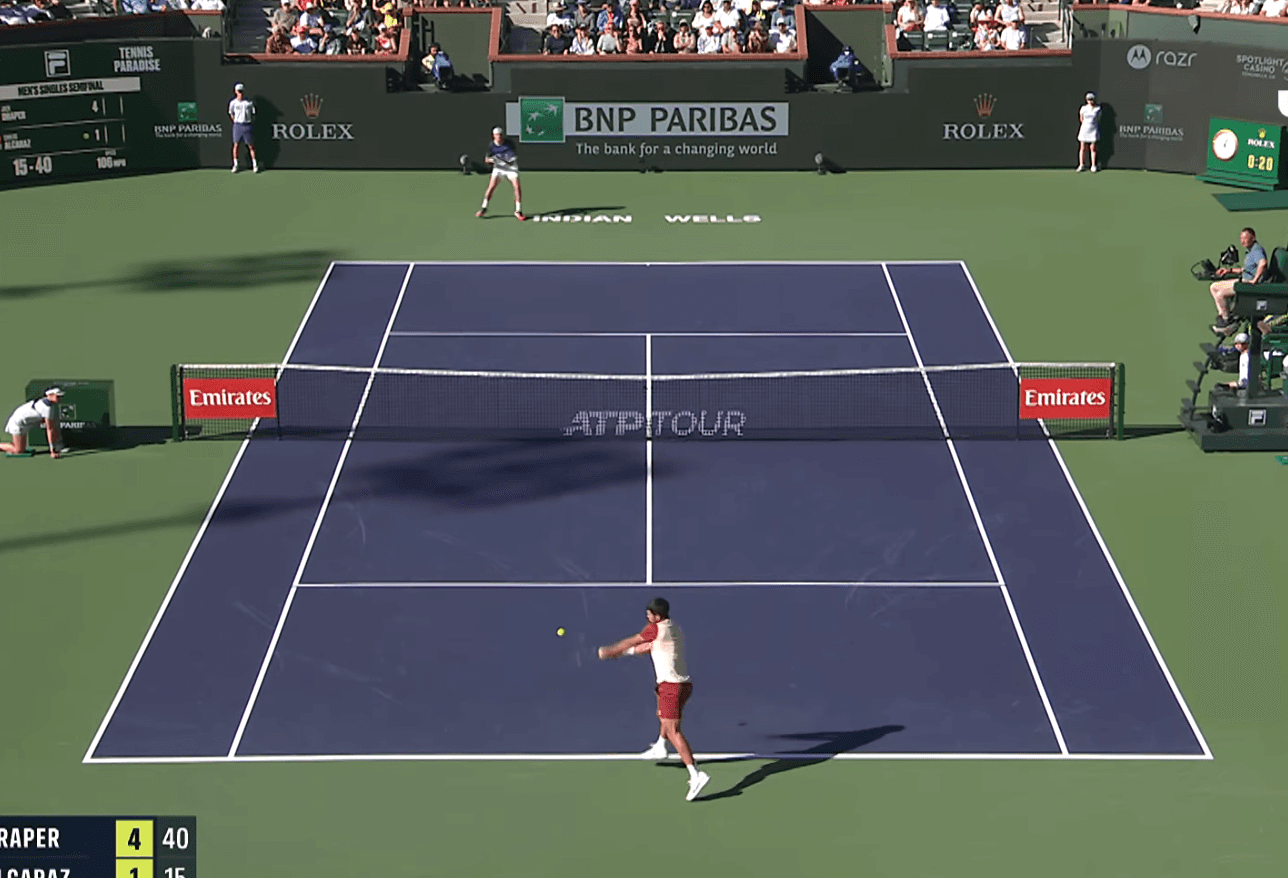
(0:38) Draper hits a central return at 1-4, 15-40. From here, not many players would get on top of the rally against Alcaraz. He seemingly has time to dictate and all the court to play into. But Draper’s return is better than it might first look: his backhand has plenty of height and it’s spinning up high when Alcaraz makes contact. The Spaniard hits a decent wide shot but it doesn’t rush Draper, who hits five forehands in a row to get Alcaraz scrambling.
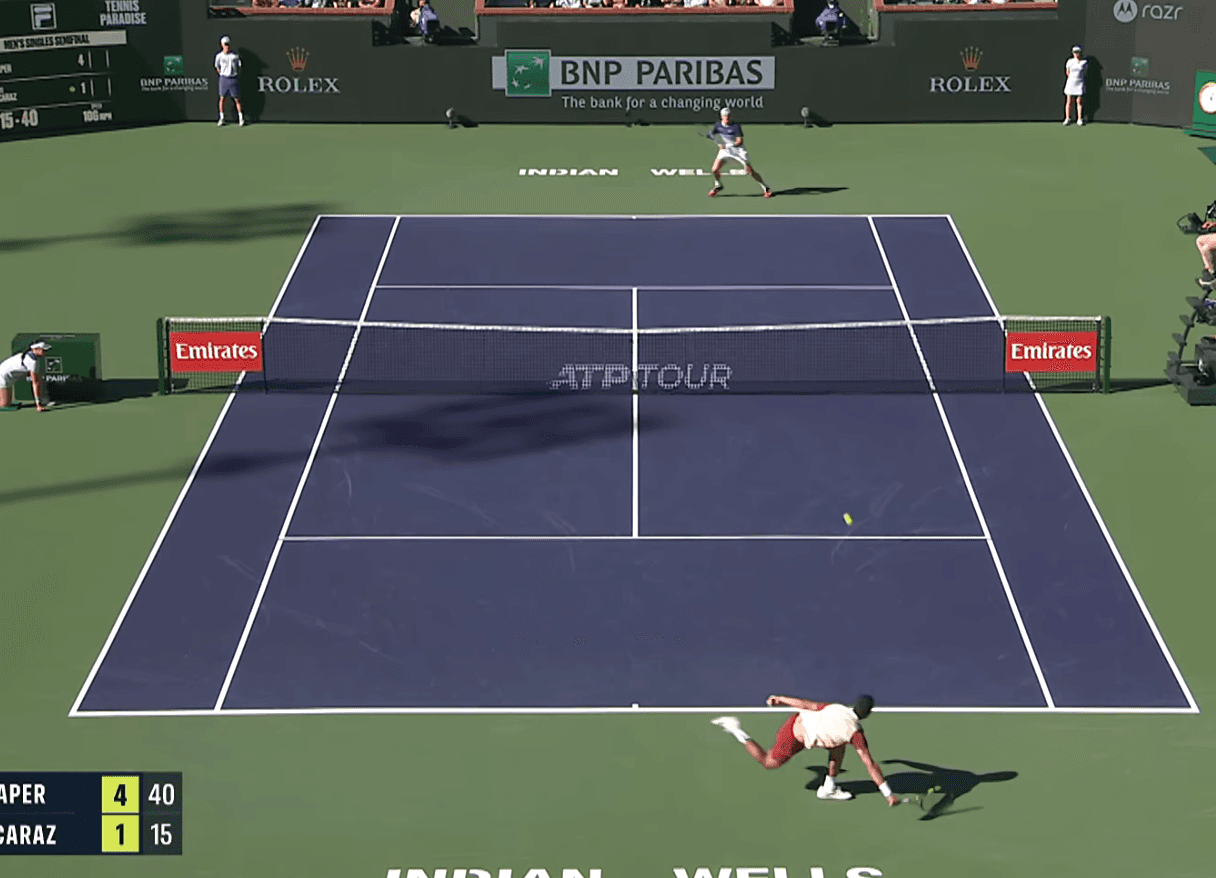
The fourth is a thunderous shot down the line. If you’ve got Alcaraz in this position (above), you’ve done very well.
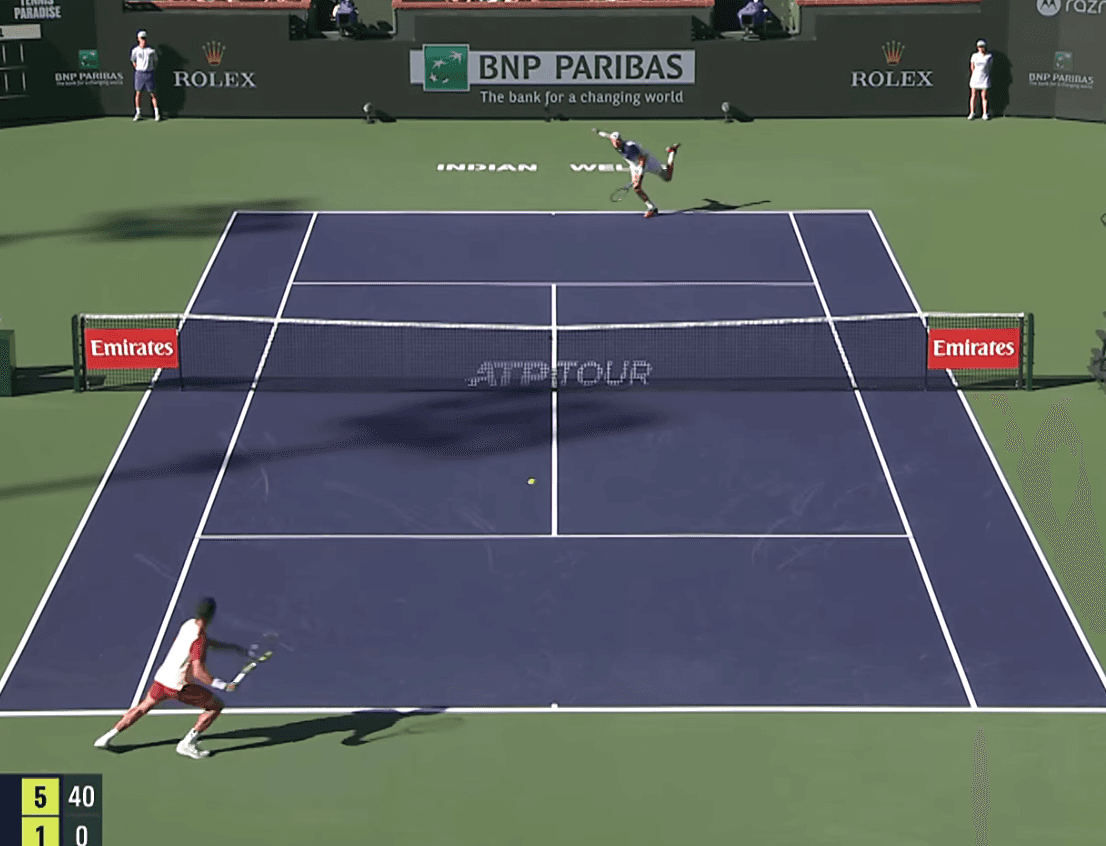
To beat Alcaraz, you can’t just serve big. You have to hit the spots in that 2-feet area around the edge of the service boxes that the TV broadcasters like to highlight. On set point (above), Draper did that. The set was done in a flash; nobody expected a 6-1 that way around.
But the match turned quickly, and Draper played poorly on break points (the first break coming via a double fault; the second an unforced error on the forehand) for Alcaraz to go 4-0 up in the second set. It got worse, with Draper looking resigned to a bagel. 6-1, 0-6.
But in the third set (2:25), Draper showed a huge range of skills. At 1-1, 15-15, he stayed in an extended rally even when Alcaraz had him on the defence and back near the “Indian Wells” sign. Alcaraz soon saw the chance to play one of his trademark drop shots.
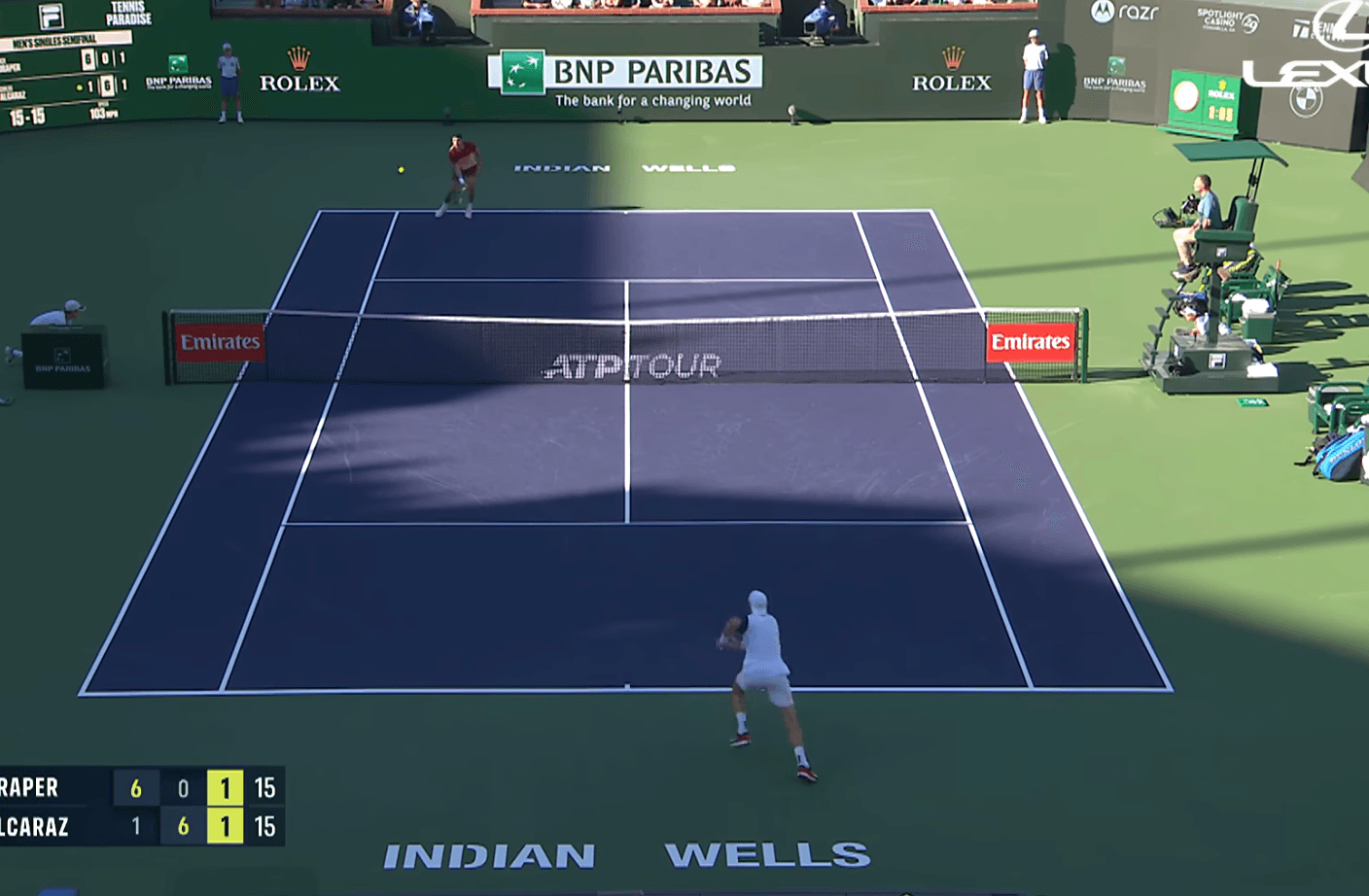
Draper shows remarkable speed to reach the well-measured shot, and plays a smart drop shot of his own, just over the net and central to give Alcaraz no angle to work with for a passing shot. Draper’s reaction to the point shows he’s not overawed in front of a big crowd playing an almost universally adored player.
Against Djokovic last week, many of Draper’s qualities were on show again.
Draper lost the first set but broke early in the second. With Djokovic serving at 30-40 (0:41), Draper shows the consistency of his backhand, gets on top of a 10-shot rally, and finishes with a big inside-out forehand.
Although he’s broken back, Draper breaks again at 4-4 (1:29) with a backhand return that looks more Djokovic-like, throwing the Serb off balance with a shot that lands a hair off the baseline.
In the first game of the third set (2:00), Djokovic gets on top of a rally, forcing Draper outside the doubles sideline with an inside-out forehand, but the latter hangs in. Draper shows his all-round game in just the one rally, hitting a squash-shot chopped forehand in defence, two lobs, a smash from behind the baseline, and two drop shots. Djokovic ends up winning the point, but the 26-shot rally proves crucial, with Djokovic saying after the match it cost him a break afterwards as he “ran completely out of gas”.
Sinner's new record
Draper’s chances of consistently at the top will partly depend on his ability to stay fit, having missed the last few months of 2025 and often struggled with injuries. He has recently switched to natural gut strings in his racket’s mains and to a platform stance on serve; both changes are intended to protect his body.
Medvedev is the only likely challenger to have already won a Slam, having beaten Djokovic in the 2021 US Open final. He also has a Tour Finals title to his name.
Others may rival the Big Two over the next decade. Ben Shelton, Jakub Mensik, and Learner Tien are only 23, 20, and 20 years old respectively.
Or perhaps Alcaraz and Sinner will remain on a different level. Their points difference over the rest of the field (8,180 and 6,030 points above world No 3 Djokovic) is comparable to how Djokovic and Rafa Nadal finished above the chasing pack in 2013, and it’s a far greater gap than the Big Three of Djokovic, Nadal, and Roger Federer enjoyed in 2018 and 2019, for example.
Alcaraz and Sinner keep breaking records. With his Indian Wells victory, 24-year-old Sinner became the youngest man in history to win every major hard court title (Australian Open, US Open, Tour Finals, and the six hard court Masters).
Top image from Tennis TV.